
Cross-Platform Discovery for Zero-Fee OnlyFans Creators
OnlyFans has no built-in search, feed, or directory, so subscribers cannot browse for free creators the way they would on a social network. This article explains how cross-platform discovery works for zero-fee pages: which external channels carry them, which legitimacy signals separate real creators from fakes, and how to research accounts without exposing your identity or payment details. A zero-fee page is one where the creator sets the subscription price to $0 and earns through tips and paid messages instead of a monthly charge.
Because the platform avoids public listings, external search is not a loophole or a workaround for a broken feature. It is the normal way subscribers find accounts, and the skills involved — verifying a handle, checking a payment link, reading a posting history — are the same skills that reduce scam exposure anywhere online. Ranking sites such as BestOnlyFans exist to compress that research into a single page.

The Structural Absence of OnlyFans Discovery Tools
There is no keyword search for creators, no category browsing, no recommendation engine, and no public list of accounts.
That design choice has practical consequences. Subscribers cannot compare prices inside the platform, cannot see how many free pages exist in a given niche, and cannot confirm whether a creator is active before subscribing.
The absence also shapes creator behaviour. Because there is no organic traffic inside OnlyFans, creators distribute links on Reddit, X, TikTok, Instagram, and aggregator sites. Each channel has its own culture, its own verification habits, and its own failure modes.

As the user base expanded, the number of accounts expanded faster, and the gap between an account existing and an account being findable widened with it.
Reddit Communities and Verification Norms
Subreddits fall into recognisable types, and each type applies different standards before a link may stay visible.
- Creator self-promotion forums: built specifically for link posting, usually with mandatory account age or karma thresholds.
- Niche interest communities: organised around a topic rather than the platform, where links appear only if they match the community theme.
- Review and rating threads: subscriber-written impressions, useful for activity checks but vulnerable to planted comments.
- Verification-specific subreddits: require photo or video proof with a handwritten tag before granting a verified flair.
A moderator has already checked that the account holder controls the content being posted, which removes the most common impersonation risk. Self-promotion rules matter too: a subreddit that enforces a minimum account age filters out the throwaway accounts that appear after a ban.
A verified creator posting in a legitimate thread can still be mimicked by a reply account with a near-identical name. Read the username character by character before clicking anything, and check whether the posting account has history in the same subreddit.

Twitter as Creator Showcase and Link Hub
Creators post preview clips, text updates, and replies that signal personality, then place the OnlyFans link in the bio or a pinned post.
That coherence is hard to fake consistently. A creator who posts original photos on X and matching content on the subscription page is almost certainly the same person operating both accounts. A mismatch between the preview material and the profile photos is a strong signal that one side was copied.
- Follow the official platform support account to see which creator posts it engages with or reposts.
- Search the same handle across X, Reddit, and any directory to confirm the account exists in more than one place.
- Read quote-tweet engagement rather than reply counts, since quote threads expose criticism that replies can be deleted or hidden.
A creator with a large following may post dozens of promotional items a day, and a genuine free page can be buried under paid promotions. Pinning behaviour is a useful filter: a pinned link usually points to the page the creator most wants subscribers to see right now.
Specialized Directories and Their Limitations
Third-party directories aggregate links so subscribers do not have to search each channel separately. They differ enormously in how the data arrives and how quickly it goes stale. A search for free onlyfans ireland, for example, returns results whose quality depends almost entirely on the directory’s update method.
| Directory Type | Update Method | Key Limitation |
|---|---|---|
| Manual submission sites | Creator or user submits a link by form | No verification of current price or activity; listings persist after pages close |
| Crawler-based aggregators | Automated collection from public posts | Sorts by volume, not legitimacy; duplicate and dead links accumulate |
| Community-curated lists | Volunteer editors maintain entries | Small coverage; quality depends on one or two active maintainers |
| Data-partnership platforms | Structured feeds plus internal review | Access may require an account; coverage limited to partnered creators |
Automated collection widens coverage, but the data decays quickly and dead links are presented with the same confidence as live ones.
A practical approach is to treat any directory listing as a lead rather than a fact. Confirm the current price on the platform itself, since directories rarely track promotional first-month pricing or later increases. A base price can never sit below $4.99, though a promotional first month may be lower.

Legitimacy Signals Across External Platforms
Five checks cover most of the risk without requiring any technical tooling.
- Matching profile photos: the same image used across platforms, not a reverse-image-search stock result.
- Consistent bio information: identical display name, niche description, and location claims on each account.
- Coordinated posting schedules: activity on one platform shortly after activity on another, indicating a single operator.
- Payment link destination: the link should point to the official platform domain, never to a mirror or redirect page.
- Response to direct questions: a real creator answers a simple question about content or schedule; a scripted account deflects.
Warning: a payment link that passes through a URL shortener, a mirror domain, or a verification portal is the most reliable single indicator of a redirect scam. Close the page and find the creator through a second channel before entering any card details.
Verification badges are useful but not decisive. A badge on one platform does not transfer to another, and a creator may be verified on X while operating an unverified Reddit account.

BestOnlyFans Directory Integration Methods
A structured directory reduces the manual work by combining several data sources into a single listing card. The value comes from the validation steps rather than the size of the index. BestOnlyFans applies the same review sequence to every free page it lists, so a subscriber can compare entries on consistent criteria instead of trusting a raw link dump.
| Data Source | Validation Step | Display Format |
|---|---|---|
| Creator-submitted links | Manual review of the linked profile before publication | Ranking card with the creator handle and category |
| Price API check | Confirm the subscription value reads $0, not a mislabelled paid tier | Explicit free-page label with the check date |
| Engagement metric scraping | Confirm posting activity within a recent window | Activity indicator on the card |
| Manual spot-check sampling | Random re-verification of live listings after publication | Correction or removal of stale entries |
Timestamps matter more than most subscribers expect. A listing validated three months ago tells you little about whether the page is still free today, because a creator can raise the base price at any time. When a price changes, auto-renew stops and existing access continues only until the paid period ends.
A $0 subscription earns through pay-per-view messages that unlock up to $50, paid chat commonly priced at $3 to $5 per message, and tips that can reach $100. The platform takes 20% of everything, so the creator keeps 80%.

Avoiding Redirect Scams and Impersonation
Learning the patterns is faster than learning individual bad accounts, because the accounts themselves are disposable.
- URL shorteners obscuring the real destination of a payment link.
- Payment requests made outside the platform, including gift cards or direct transfers.
- Newly created accounts carrying implausibly high follower counts.
- Stolen content carrying another creator’s watermark or a cropped edge.
- Pricing claims that contradict the platform listing, such as a paid tier described as free.
- Pressure to complete a verification step off-platform before access is granted.
A cloned login screen captures credentials, and a cloned checkout page captures card details. Checking the domain before typing anything defeats the majority of redirect scam attempts, because a phishing page rarely controls the exact official domain.
Card verification itself is a routine, low-risk step when done on the real platform. Any verification fee larger than that, requested by a creator or a third-party site, is not a platform process.
Privacy Preservation During External Discovery
Browsing for creators generates a trail: search history, cookies, and sometimes an email address. Separating that trail from your primary identity keeps the research phase from leaking into your normal accounts.
- Use a dedicated email address for any subscription or directory correspondence.
- Research in a separate browser container or profile so cookies do not follow you back.
- Avoid searching creator handles from your primary social accounts, where the platform may suggest connections.
- Generate a virtual card before entering payment details anywhere, including on the official platform.
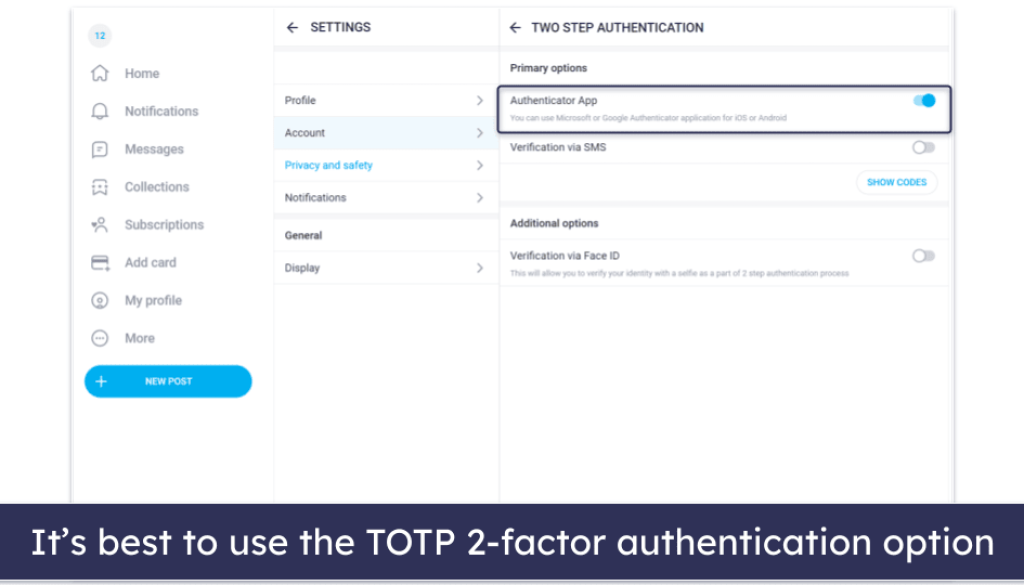
Two-factor authentication on the subscription account is the last line of defence if a credential does leak. Enable it before subscribing rather than after, since account recovery without it is slow and depends on the same email address that may already be compromised.
Discovery happens in a disposable environment, and only the final subscription step touches data that is tied to your real identity.
FAQ
Why does OnlyFans not have a search function for finding creators?
The platform is designed as a private subscription container rather than a marketplace with public listings. There is no feed, no category index, and no keyword search, so creators distribute their own links through external channels. That keeps the subscriber list private but pushes all discovery work onto the subscriber.
How can I tell if a Reddit-promoted OnlyFans link is legitimate?
Check the posting account’s history in the same subreddit, confirm any verification flair, and compare the handle against the creator’s other platforms.
What information does the ranking site use to verify that a page is actually free?
It combines creator-submitted links, a price check confirming the subscription reads $0, activity scraping to confirm recent posting, and random manual re-checks after publication. Each listing carries a timestamp so the reader can judge how current the information is.
Should I create separate accounts for discovering OnlyFans creators versus subscribing to them?
A dedicated email for research and a virtual card for payment cover most of the risk. If you use one account, enable two-factor authentication and avoid searching creator handles from your primary social profiles.